
The price you're quoted is not the price you pay
A factory quotes ¥20 per piece. You calculate: sell at 60 SAR (≈¥113), buy at ¥20, profit ¥93. Then the bills arrive: freight, duty, VAT, clearance, delivery. Your real cost is ¥42. Still profitable — but half the margin you planned for. Every successful importer we know thinks in landed cost from day one; every failed one discovered it on their first shipment. This guide makes sure you're in the first group.
The 9 components of landed cost
1) Product price — the factory quote, after negotiation. 2) China local transport — factory to consolidation warehouse, usually ¥1–3/kg. 3) Export handling — documents, port fees, ¥150–500 per shipment. 4) International freight — the big variable: $4–7/kg air, $80–150/CBM sea. 5) Insurance — ~0.3% of goods value, skip it at your own risk. 6) Import duty — 5% in most GCC countries, up to 15% in Saudi by category, calculated on CIF value (cost + insurance + freight). 7) VAT — 15% Saudi, 10% Bahrain, 5% UAE/Oman, 0% Kuwait/Qatar, calculated on CIF + duty. 8) Customs clearance — broker fees, inspections. 9) Last-mile delivery — port to your door.
Worked example: 500 phone cases, Guangzhou → Riyadh
Let's run real numbers. Product: phone case at ¥20/piece, 500 pieces = ¥10,000. Cartons: 5 boxes, 100 kg actual weight, 0.5 CBM. By air (chargeable weight ~100 kg at $5/kg ≈ ¥3,550): export+local ¥800, freight ¥3,550, insurance ¥30. CIF value ≈ ¥14,380. Saudi duty at 5% ≈ ¥719. VAT 15% on (CIF+duty) ≈ ¥2,265. Clearance+delivery ≈ ¥900. Total: ¥18,264 → ¥36.5 per piece landed. By sea for the same goods: freight drops to ~¥600, total ≈ ¥14,300 → ¥28.6 per piece — but 3 weeks slower. Selling at 60 SAR (¥113), both work. Selling at 30 SAR (¥57), only sea works. This is why the shipping method is a business decision, not a logistics afterthought.
Chargeable weight: the trap in every air quote
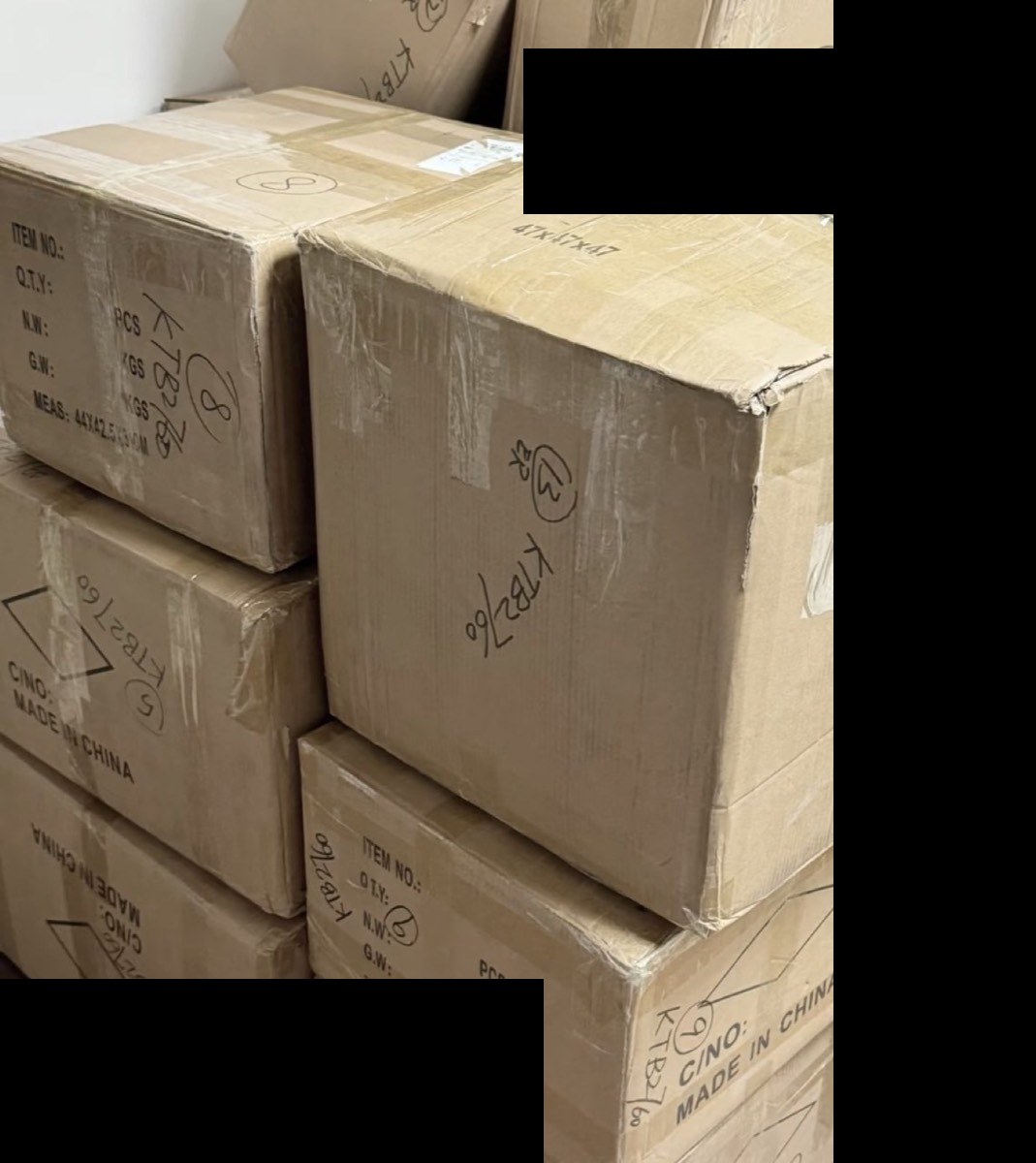
Air freight bills by chargeable weight = the HIGHER of actual weight and volumetric weight (L×W×H in cm ÷ 6000). A carton of pillows might weigh 8 kg but 'volumes' at 25 kg — you pay for 25. This is why consolidation matters: we remove supplier over-packaging and repack dense, which routinely cuts 15–30% off volumetric weight. Ask any forwarder for the volumetric rule before accepting a quote; if they can't explain it, find another forwarder.
Why we quote one landed price instead of a commission
Traditional agents charge 5% commission on the factory price — then freight, duty and VAT still hit you separately, and you're doing this math yourself for every product. We built our pricing the other way: one landed price per piece, everything included, quoted before you commit. You compare it against your selling price and know immediately if the product works. Our margin is inside that number — no hidden commission, no 'surprise' fees at the port. If a product can't be landed profitably, we'll tell you before you order, not after.