
Why this decision matters more than the product
Pick the wrong product and you lose one order. Pick the wrong agent and every order is at risk — your money sits in a Chinese bank account you can't touch, with goods you've never seen, shipped by someone you'll never meet. The Gulf import community is full of stories: the agent who vanished after the deposit, the 'factory' that was a trading company with 40% markup, the inspection that was three blurry photos of someone else's goods. Almost all of these were avoidable with 30 minutes of verification.
Check 1: A verifiable business license
Every legitimate Chinese company has a Unified Social Credit Code (统一社会信用代码) you can verify in the National Enterprise Credit Information System. Ask for it. If an agent hesitates to share their license, the conversation is over. Our license: SourceToGulf Supply Chain Co., Ltd. (广州东达东供应链管理有限公司), registered in Guangzhou — verify it yourself before you send us a single riyal. That's how this should work.
Check 2: Physical presence, not just WeChat
Ask: which market do you work from? Can you video-call me from Yiwu tomorrow? A real agent walks into a market and films the actual stalls. A fake one sends you catalog photos anyone can download. This matters for price too — agents with real market access get offline prices 10–30% below online listings.
Check 3: Inspection with evidence, on camera
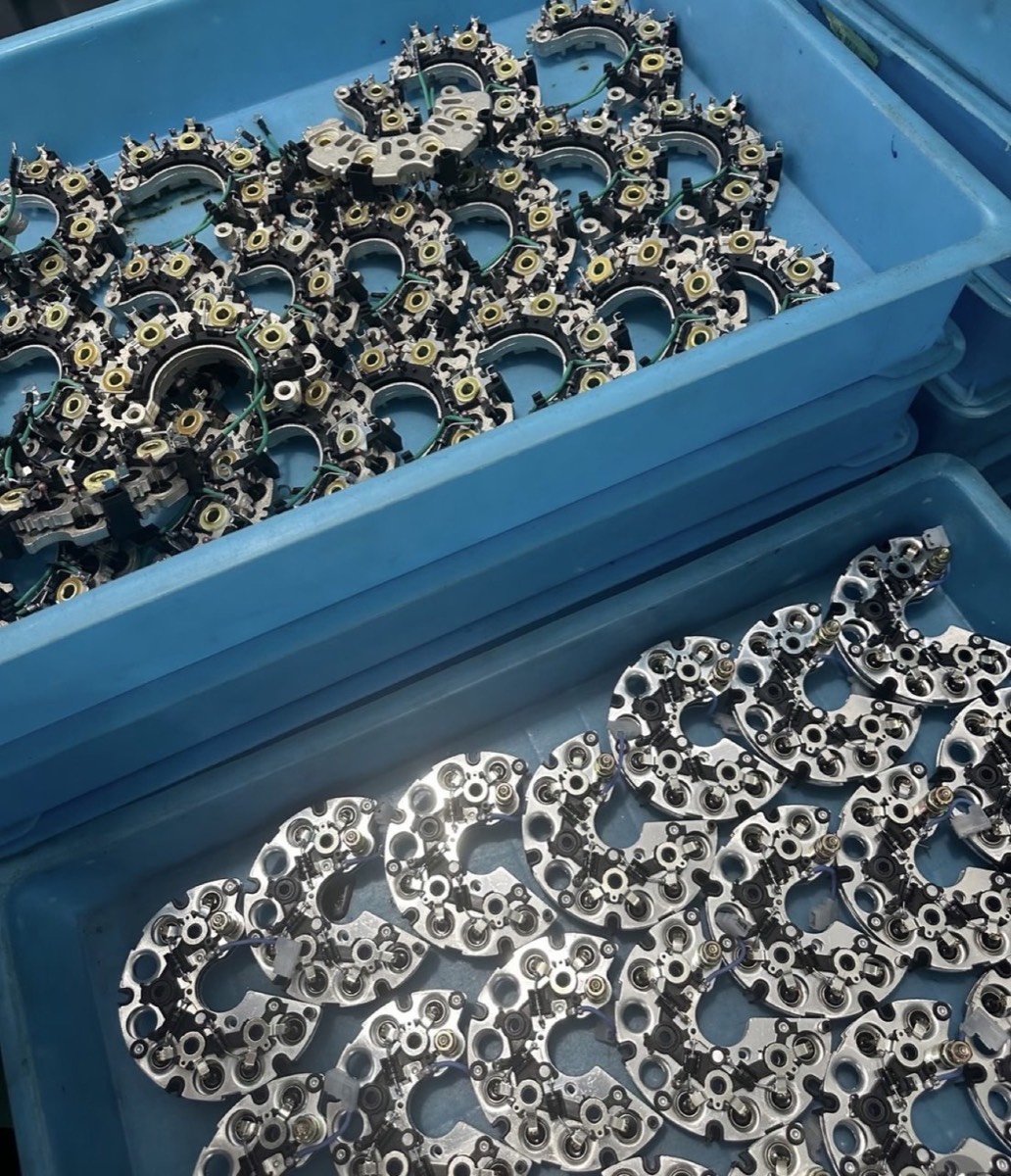
The single most valuable service an agent provides is being your eyes. Before anything ships, you should receive dated photos and videos of YOUR goods: cartons opened, quantities counted, defects flagged. If an agent treats inspection as an annoying extra, they're telling you they plan to ship whatever arrives.
↑ One of our actual inspection clips. Your agent should be able to show you footage like this for YOUR order — if they can't, ask why.
Check 4: Pricing you can audit
There are two honest pricing models: a transparent commission (5–10% on product value) or a fixed landed price per piece. Both work. What doesn't work is vagueness: 'product price plus some fees we'll calculate later.' We use the landed-price model — one number per piece covering product, inspection, shipping, customs and VAT — because you can compare it directly against your selling price and know your margin before paying anything.
Check 5: Language and response time
You'll be coordinating across a 4–5 hour time difference, often during your selling hours. Test it before committing: send a detailed question and see what comes back. One-word answers, day-long delays, or Google-translated Arabic are previews of your future. The team answers in Arabic, English and Chinese — usually within the hour during Gulf business time.
Red flags: walk away when you see these
• Full payment demanded before any inspection. • Prices far below every other quote (the deposit is the product). • No business license or a license that doesn't match the company name. • Refusal to video-call from the market or warehouse. • Pressure to 'order now before the price goes up.' • Payment to a personal account instead of a company account. Any one of these should end the conversation.