
Why the UAE is the easiest Gulf market to start with
Of the six GCC countries, the UAE is the friendliest to a first-time importer. Duty on most consumer goods is a flat 5% of CIF value — the lowest common rate in the region — and VAT is another 5%, among the lowest in the world. There is no Saudi-style SABER platform for most general merchandise: no pre-market certificate standing between your order and the shelf. Add the region's biggest port (Jebel Ali), its biggest air hub (DXB), and a customs authority that processes entries around the clock, and you get the shortest learning curve in the Gulf.
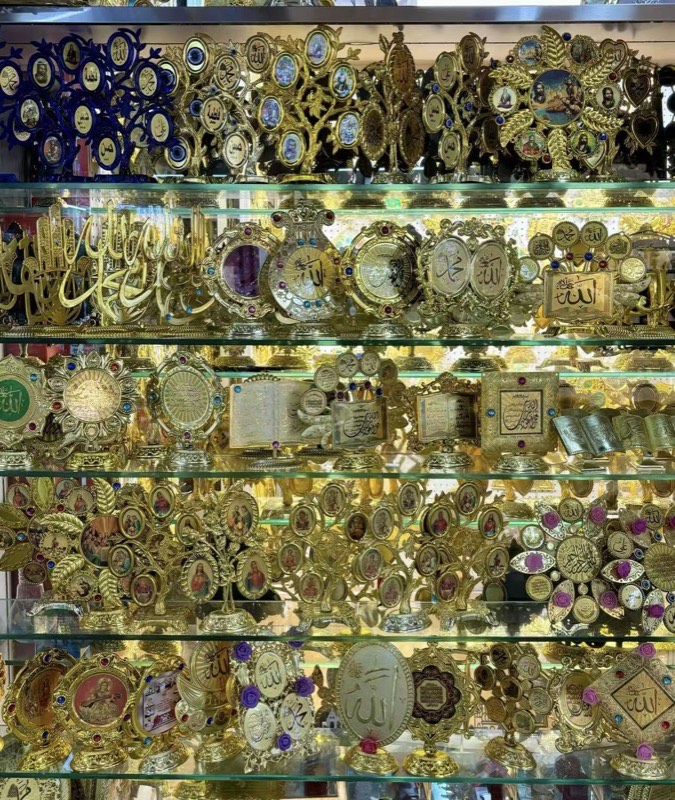
The UAE is also the Gulf's re-export door: a large share of goods landed in Dubai moves on to Saudi Arabia, Africa and Central Asia. That means your Dubai trade license can serve three markets, not one — more on that in the free zone section below.
Step 1: Get your paperwork ready — before you buy anything
For commercial imports, UAE customs clears goods against a trade license (from the DED in Dubai, or the equivalent authority in your emirate) that includes import as an activity. Applying is online and typically takes a few days to a couple of weeks; an e-commerce license covers most small importers starting out. Without the license you can still receive personal parcels, but anything commercial-scale will get held.
One more planning note: if your taxable supplies will pass AED 375,000 a year, you'll need to register for VAT. Below that threshold, registration is optional. Most first-season importers stay under it — but if you're planning scale, register early, because the input VAT you pay at customs is recoverable once you're registered.
Step 2: Find a supplier you can actually trust
Alibaba is a fine research tool, but the prices you see there are rarely the real floor. The same diffuser or phone holder in Guangzhou and Yiwu's wholesale markets is often 10–30% cheaper, and plenty of solid factories keep no English storefront at all. The rules don't change with the channel: check the business license, get a video walk-through of the actual factory or shop, and don't wire money to a supplier nobody has physically visited. The team walks these markets every week — when we quote a supplier, we've stood in their shop.
For small orders, the practical test is simple: send a photo of what you want on WhatsApp. A serious sourcing partner comes back in days with a real factory price, a real MOQ and a real lead time — not a link to an Alibaba listing. That's exactly how our process starts.
Step 3: Does your product need certification? (ECAS, explained)
Here's the UAE's pleasant surprise: unlike Saudi Arabia's SABER — where whole categories of goods need pre-market certificates — most general consumer merchandise (home fragrance, textiles, accessories, plastic kitchenware, general tools) needs no product certificate at all to clear UAE customs. You import, you sell.
The exception is electrical and electronic products. Low-voltage electrical equipment falls under the UAE's ECAS conformity scheme (run by MOIAT): chargers, adapters, lighting, appliances and similar items need an ECAS certificate before they can be placed on the market. The supplier usually holds or can arrange the test reports; expect modest fees and a few working days. Cosmetics, children's toys and a few health-adjacent categories have their own registration routes — worth checking before you order, not after the goods arrive.
Planning to send the same goods on to Saudi Arabia? Then SABER applies the moment you re-export — our Saudi import guide covers that side in detail.
Step 4: Understand your real landed cost (worked example)
The factory price is roughly a third of your real cost. The full stack: product price + local transport in China + export handling + international freight + 5% import duty on CIF value + 5% VAT on (CIF + duty) + clearance + last-mile delivery. We broke down every fee in our landed cost guide; here's the short version with real numbers.
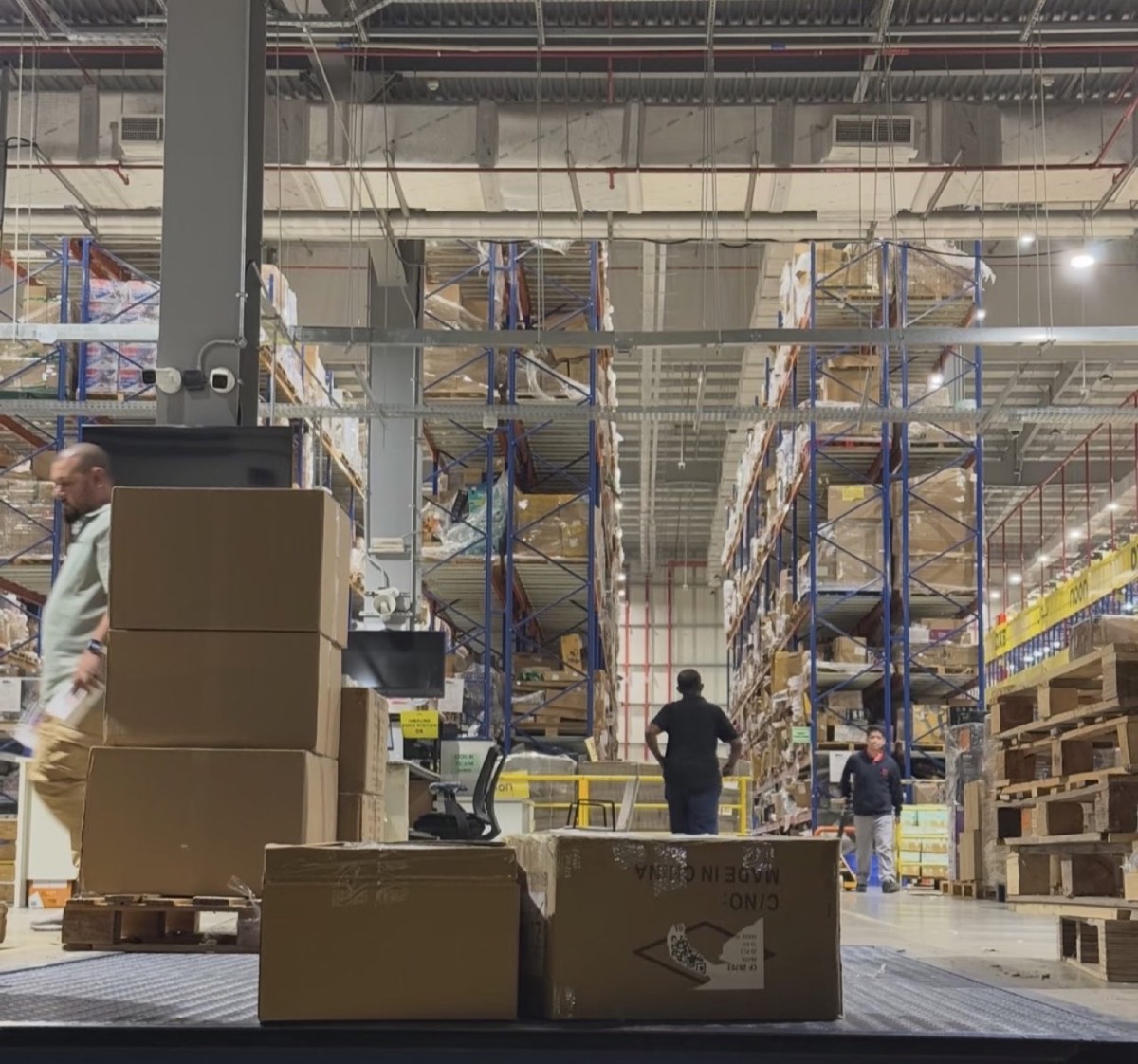
Worked example — 100 reed diffusers, ¥20 each, 0.3 kg each, shipped by consolidated air freight: goods 100 × ¥20 = ¥2,000. Freight: first 0.5 kg at ¥68, then ¥45.6/kg → ¥68 + (29.5 × ¥45.6) = ¥1,413. Total CIF ≈ ¥3,413 ≈ $478. Duty 5% = $23.90. VAT 5% on ($478 + $23.90) = $25.10. Landed total ≈ $527 ≈ AED 1,930 — about AED 19.3 per diffuser, everything included.
If that per-piece number still leaves room at your retail price, the product works. If it doesn't, no amount of negotiation with the factory will save it — pick a lighter product or a bigger order. You can run your own numbers in seconds with the landed cost calculator on our home page.
Step 5: Inspect before shipping — always
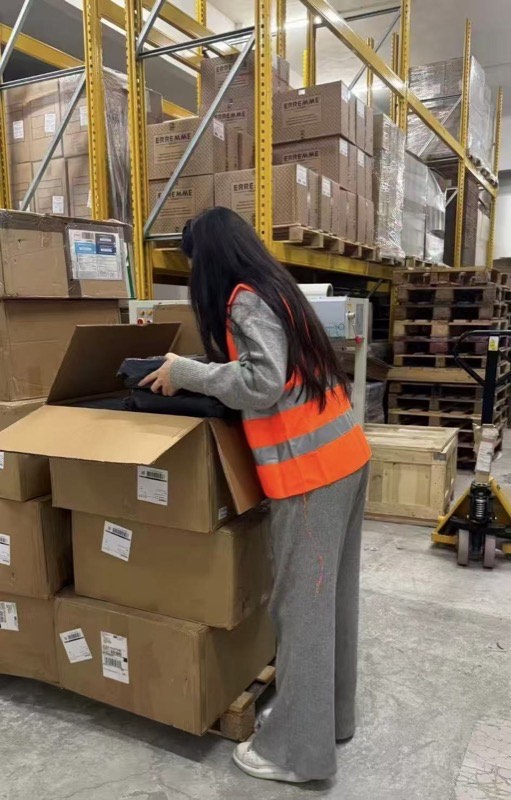
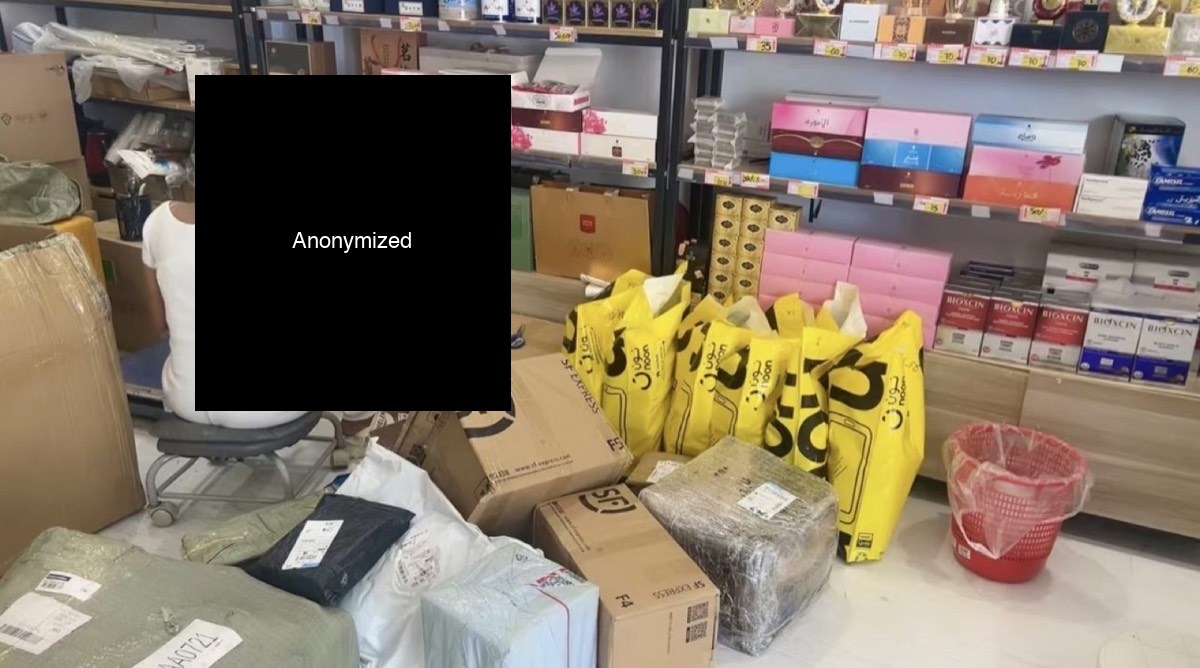
Once goods leave China, your leverage is gone. Shipping a defective carton back from Dubai costs more than the goods inside it. So inspection happens before anything ships: open the cartons, count, test, film it. Every order we handle gets a photo and video inspection report you approve before we book the flight or the container. It's the single step that separates importers who scale from importers who quit.
Step 6: Air or sea — which should you choose?
Both lanes into the UAE are mature and fast by global standards. The decision is mostly about weight and urgency:
| Method | Door-to-door time | Typical cost | Best for |
|---|---|---|---|
| Express / consolidated air | 5–10 days | $4–7 per kg | Orders under ~300 kg, testing new products, seasonal restocks |
| Air freight (cargo) | 4–8 days | $3–5 per kg (volume rules apply) | 200–500 kg, urgent larger orders |
| Sea LCL (shared container) | 18–30 days | $80–150 per CBM | 1–15 CBM, proven sellers, Ramadan & Eid stock |
| Sea FCL (full container) | 20–32 days | Quoted per container | 15+ CBM, wholesale volumes |
Practical rule from our weekly shipments: test new products by air, restock proven winners by sea. And if you're buying for Ramadan or Eid, work backwards from the selling season — sea freight leaving China in the wrong week arrives after the season ends. We consolidate multiple suppliers into one shipment, so small orders from three factories still travel at sane rates.
Step 7: Clear UAE customs without delays
UAE customs wants: commercial invoice, packing list, bill of lading or airway bill, and certificate of origin (which also unlocks preferential rates under the China–GCC FTA where applicable). The classic delay isn't a missing document — it's documents that disagree. An invoice that says 500 pieces and a packing list that says 480, a declared value that looks invented, an HS code that doesn't match the goods: each one parks your shipment while storage fees run. We prepare and cross-check every document in China, where a mistake costs a phone call — not a week in a customs yard. Everything is filed through the UAE's electronic systems, and in most cases clearance is a matter of hours to a couple of days.
Free zones & re-export: Dubai's real advantage
Land your goods in a free zone like JAFZA (next to Jebel Ali port) and a different game opens up: goods in free zones sit outside the customs union, so the 5% duty is suspended until they enter the local market — and never charged at all if they're re-exported to Saudi Arabia, Africa, or anywhere else. You only pay for what you actually sell inside the UAE.
This is why Dubai works as a Gulf HQ: one shipment, one warehouse, and from there you serve the UAE retail market, re-export to the wider GCC, and drop-ship to Africa — with different duty treatment for each channel. If your plan is bigger than one country, structure your imports around a free zone from day one.
What actually sells in the UAE?
From our own order book, the categories that consistently move for Gulf sellers: home fragrance and reed diffusers (a Gulf staple, year-round), Ramadan and Eid decorations and lighting (order 4–5 months ahead of the season), hijab accessories and modest-fashion items, phone and car accessories, compact kitchen tools, and beauty tools. These are exactly the categories we curate in this month's product picks — each with a factory price, a landed price to the Gulf, MOQ and lead time, so you can see real numbers instead of guesses.
Selling online? noon, Amazon.ae and TikTok Shop are the main channels — and livestream selling is growing fast. We covered how to build a product line for it in the livestream sellers' guide.